Flustra foliacea (Linnaeus, 1758)

Close

Taxonomic information

This block is currently either hidden, or has no content. Content (if there is any) will be displayed once it is moved above the divider.
Close

Image

Close

Taxon Description

Flustra foliacea (Linnaeus, 1758)

General Description

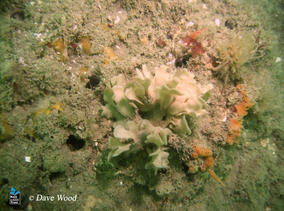
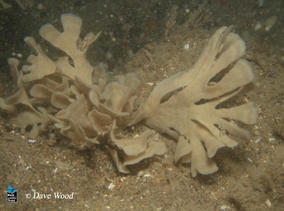
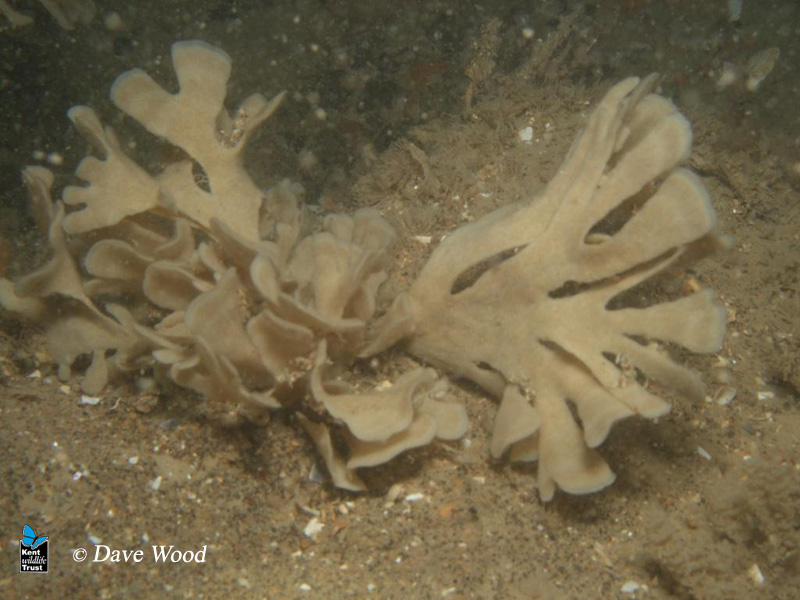
Flustra foliacea is a common bryozoan throughout the temperate NE Atlantic. Colonies are predominantly found in the subtidal, but may often be washed-up along the coastline, particularly after storms. F. foliacea forms bushy colonies with stiff brown or light grey fronds. Fresh colonies have a distinctive lemon-like smell and grow to between 6 and 20 cm.  F. foliacea attaches to hard substrates including stones and shells by an encursting basal portionof the colony. The colonies provide a microhabitat to a diverse assemblage of epifaunal species.

stra
foliacea is a common bryozoan throughout the temperate NE
Atlantic. Colonies are predominantly found in the subtidal, but may often be
washed-up along the coastline, particularly after storms.
F. foliacea forms bushy colonies
with stiff brown or light grey fronds. Fresh colonies have a distinctive
lemon-like smell and grow to between 6 and 20 cm. The colonies provide a
microhabitat to a diverse assemblage of epifaunal species

Growth

Colonies grow through asexual budding. The growing season extends from March to September, with colonies remaining dormant from October to February. During the first year of growth, colonies grow as flat incrustations on the substratum, with erect growth beginning from the second year onwards. Annual growth checks, in the form of lines across the frond surface are frequently visible, and can be useful in ageing a colony. Colonies are typically expected to live for around 12 years.

Look Alikes

F. foliacea is often mistaken for seaweed, however, closer inspection of the fronds will reveal the very apparent zooids, confirming the colony as an animal species. Several other bryozoans are similar in shape and habitat to F. foliacea including other species of Flustra and Carbasea carbasea. In particular F. foliacea may be confused with Securiflustra securifrons (narrow-leaved hornwrack), but may be distinguished by broader fronds than S. securifrons. Additionally, the fronds of  S. Securifrons are typically divided into wedge-shaped segments, unlike F. foliacea.

Morphology

Colonies form a bushy clump of flat radiating fronds with terminally rounded lobes. Since F. foliacea is only lightly calcified, the colony as whole is flexible, allowing it move with the current. Zooids are approximately rectangular in shape and are arranged “back to back” to form bilaminar sheets. The frontal surface of the zooids is entirely membranous with no gymnocyst or cryptocuste preesnt. Four to five short, thick spines are arranged around the edge of the zooids. The polypide has13-14 tentacles and avicularia are present.

Colonies exhibit a degree of morphological plasticity, with frond width, and hence drag resistance, varying. Frond width is thought to be related to current speed.

Size

Colonies typically grow to between 6 and 20 cm. Zooids range from 0.4 by 0.2 -0.28 mm

Associations

Clumps of F. foliacea form a rich and diverse microhabitat, which provides a reasonably stable and perennial substrate for epizoobionts including other bryozoans species (e.g. Bugula, Scrupcellaria, Crisia and commonly Electra pilsoa). In the North Sea, the epizoobionts of F. foliacea can be divided into two distinct assemblages. In the northern North Sea, the assemblages are characterised by Amphiblestrum flemingii, Callopora dumerilii and Tricellaria ternate, while southern assemblages are characterised by Electra pilosa and Plagioecia patina. (Bitschofsky et al. 2011) Various predators, including sea urchins (Psammechinus miliaris), crabs, nudibranchs and  pycnogonids (Achelia echinata), feed on F. foliacea and its associated epifauna.

Distribution

Colonies are abundant subtidally throughout the British Isles. The species is distributed from the Barents Sea and Greenland south, but is thought not to extend below northern Spain.

Habitat

Flustra foliacea is a cold temperate species that is most frequently found on coarse grounds which have stable, fixed substrata and strong currents. Colonies, however, are able to colonise the majority of hard substrata such as shells, stones or cobbles. The species occurs subtidally, but is often washed on to the strand line. F. foliacea has been recorded from brackish environments in the Bay of Fundy, Baltic Sea and the Netherlands (Winston, 1977).

Life Cycle

The founding zooid (ancestrula) develops into a young colony, and later into an adult colony through asexual budding. Sexually produced embryos are brooded within the colony, before larvae are released. Larvae settle after liberation and metamorphose into an ancestrula.

Life Expectancy

Colonies are typically expected to live for around 12 years.

Trophic Strategy

Like all bryozoans, F. foliacea is a suspension feeder. It feeds on small phytoplankton using ciliated tentacles of the lophophore.

Reproduction

Female reproductive cells (ova) are orange in colour. They typically appear in August and move into the brood chambers (ovicells) during October. The sexually-produced embryos are brooded until larval release which commences in February. The larvae of F. foliacea are large non-feeding coronate larvae, which lack a shell and have a densely ciliated belt (the corona) for locomotion.

Close

Countries map

This block is currently either hidden, or has no content. Content (if there is any) will be displayed once it is moved above the divider.
Close

Specimens map

Javascript is required to view this map.
Close

Authors & Sources

Close

Google Scholar

    Content below this block will be hidden

    Biodiversity Heritage Library

    This block is currently either hidden, or has no content. Content (if there is any) will be displayed once it is moved above the divider.

    Global Biodiversity Information Facility

    This block is currently either hidden, or has no content. Content (if there is any) will be displayed once it is moved above the divider.

    Morphbank Images

    This block is currently either hidden, or has no content. Content (if there is any) will be displayed once it is moved above the divider.

    National Biodiversity Network

    This block is currently either hidden, or has no content. Content (if there is any) will be displayed once it is moved above the divider.

    National Center for Biotechnology Information

    This block is currently either hidden, or has no content. Content (if there is any) will be displayed once it is moved above the divider.

    Wikipedia

    This block is currently either hidden, or has no content. Content (if there is any) will be displayed once it is moved above the divider.

    Specimens

    This block is currently either hidden, or has no content. Content (if there is any) will be displayed once it is moved above the divider.

    Specimens

    This block is currently either hidden, or has no content. Content (if there is any) will be displayed once it is moved above the divider.

    Blog entry

    This block is currently either hidden, or has no content. Content (if there is any) will be displayed once it is moved above the divider.

    Poll

    This block is currently either hidden, or has no content. Content (if there is any) will be displayed once it is moved above the divider.

    Phylogenetic tree

    This block is currently either hidden, or has no content. Content (if there is any) will be displayed once it is moved above the divider.

    Forum topic

    This block is currently either hidden, or has no content. Content (if there is any) will be displayed once it is moved above the divider.

    ITIS Name

    This block is currently either hidden, or has no content. Content (if there is any) will be displayed once it is moved above the divider.

    Biographies

    This block is currently either hidden, or has no content. Content (if there is any) will be displayed once it is moved above the divider.

    History

    This block is currently either hidden, or has no content. Content (if there is any) will be displayed once it is moved above the divider.

    Original description

    This block is currently either hidden, or has no content. Content (if there is any) will be displayed once it is moved above the divider.

    Newsletter issue

    This block is currently either hidden, or has no content. Content (if there is any) will be displayed once it is moved above the divider.

    Taxonomy

    This block is currently either hidden, or has no content. Content (if there is any) will be displayed once it is moved above the divider.

    Image Gallery Thumbnails

    This block is currently either hidden, or has no content. Content (if there is any) will be displayed once it is moved above the divider.

    Scratchpads Issue Queue

    This block is currently either hidden, or has no content. Content (if there is any) will be displayed once it is moved above the divider.

    ClustrMap

    This block is currently either hidden, or has no content. Content (if there is any) will be displayed once it is moved above the divider.

    Apache Solr recommendations: More like this

    This block is currently either hidden, or has no content. Content (if there is any) will be displayed once it is moved above the divider.

    Apache Solr Core: Sorting

    This block is currently either hidden, or has no content. Content (if there is any) will be displayed once it is moved above the divider.

    Apache Solr Search: Current search

    This block is currently either hidden, or has no content. Content (if there is any) will be displayed once it is moved above the divider.

    Apache Solr Multisite Search: Current search

    This block is currently either hidden, or has no content. Content (if there is any) will be displayed once it is moved above the divider.

    Printer, email and PDF versions

    This block is currently either hidden, or has no content. Content (if there is any) will be displayed once it is moved above the divider.

    British Bryozoologists

    This block is currently either hidden, or has no content. Content (if there is any) will be displayed once it is moved above the divider.

    UWho Login Block

    This block is currently either hidden, or has no content. Content (if there is any) will be displayed once it is moved above the divider.

    Active forum topics in group

    This block is currently either hidden, or has no content. Content (if there is any) will be displayed once it is moved above the divider.

    New forum topics in group

    This block is currently either hidden, or has no content. Content (if there is any) will be displayed once it is moved above the divider.
    Syndicate content
    Scratchpads developed and conceived by: Vince Smith, Simon Rycroft, Dave Roberts, Ben Scott...